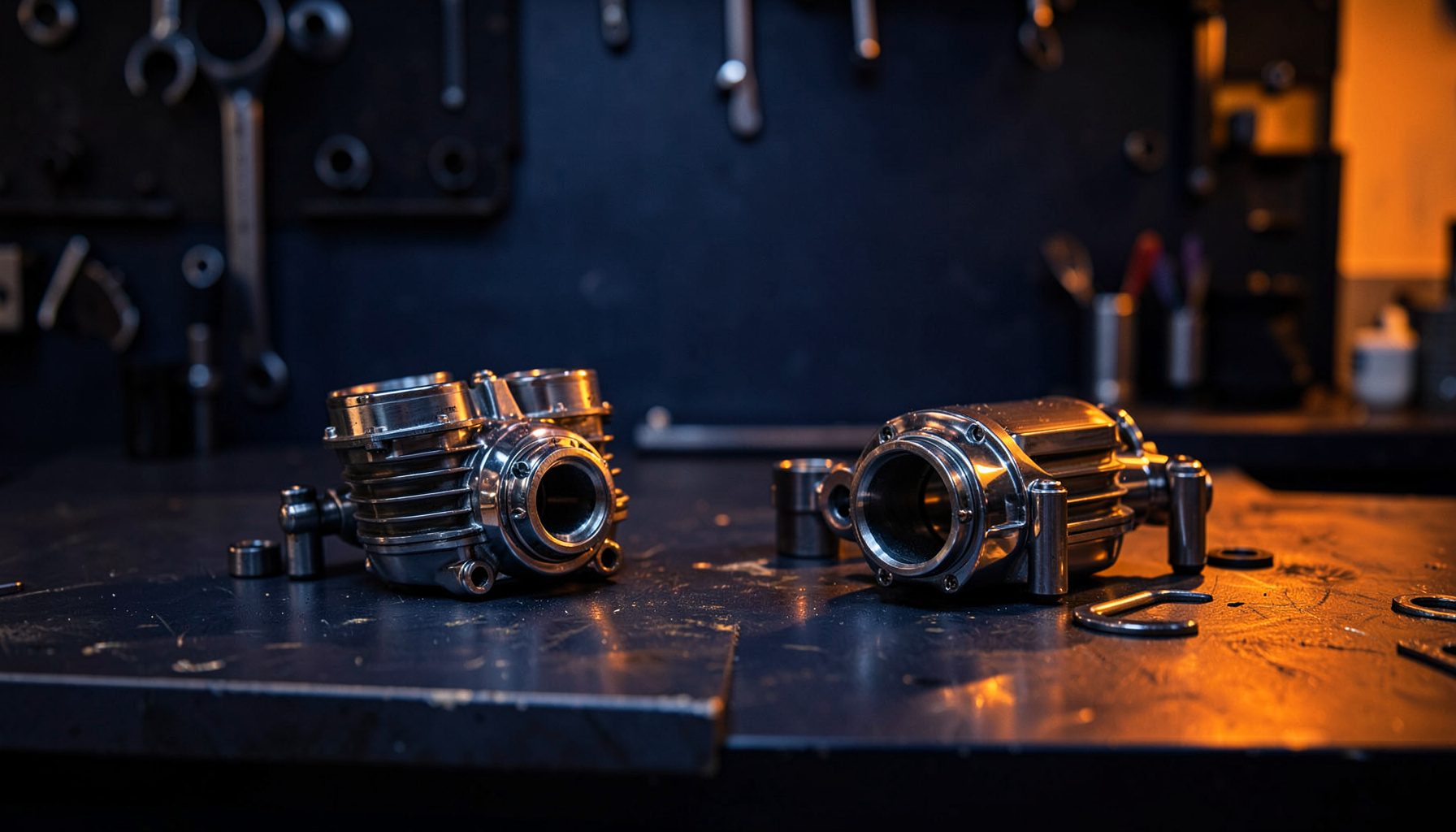
A Beginner's Guide to Motorcycle Carburettor Tuning
A well-tuned carburettor helps a motorcycle start easily, respond cleanly to the throttle and use fuel efficiently. Although electronic fuel injection is common on newer bikes, many learner-friendly, classic and off-road motorcycles still rely on carburettors. Learning the basics can save workshop time and make troubleshooting less intimidating.
Carburettor tuning is a process of matching fuel delivery, airflow and engine speed to the motorcycle’s condition and riding environment. Australian temperatures, fuel blends, long-distance riding and dusty roads can all influence how an engine runs, so adjustments should be made methodically rather than by guesswork.
Understand What The Carburettor Does
A carburettor mixes petrol with air before the mixture enters the engine. At small throttle openings, the pilot circuit and air or fuel screw have the greatest influence. As the throttle opens, the needle, needle jet and main jet progressively control fuel delivery. The float and its needle valve maintain the fuel level inside the bowl.
The ideal mixture changes according to engine temperature, altitude, airbox design, exhaust flow and fuel type. A motorcycle ridden around sea-level Sydney may need a different setting from one used in the Snowy Mountains or on high-country roads. Older motorcycles can also react poorly to E10, so check the owner’s manual and use the fuel recommended for the model.
A lean mixture contains too much air and too little fuel. It may cause hesitation, hanging revs, popping on overrun or an unusually hot-running engine. A rich mixture has excessive fuel and can produce black smoke, rough running, poor economy and a sooty spark plug.
Read The Symptoms Before Adjusting
Start by identifying when the problem occurs. Difficult starting with the choke engaged may point to a blocked pilot jet or stale fuel. Hesitation just off idle can involve the pilot circuit, air screw or an intake leak. A flat spot at higher revs is more likely to involve the needle, main jet, fuel supply or air filter.
Inspect simple causes before changing jet sizes. Check that the throttle cable has a small amount of free play, the air filter is clean, the fuel tap flows properly and the rubber inlet manifolds are secure. Cracked manifolds can admit unmetered air and make tuning adjustments appear ineffective.
Spark plug colour can provide a useful clue, but it should not be treated as a perfect diagnostic tool on modern fuels. A plug check is most meaningful after the engine has reached operating temperature and the motorcycle has been run under the relevant throttle conditions. Record each change so you can return to a known setting.
Prepare The Motorcycle And Work Area
Work on a cool motorcycle in a well-ventilated area away from flames, heaters and electrical sparks. Petrol vapour is hazardous, so keep a suitable extinguisher nearby and avoid smoking. Support the motorcycle securely, especially if the engine must run while it is stationary.
Use clean screwdrivers that fit the brass jet screws properly, a small ruler or vernier calliper, replacement O-rings where necessary and a container for fuel. Photograph hose routing and cable positions before removing the carburettor. A service manual is particularly valuable for float height, baseline screw settings and tightening specifications.
Cleanliness matters because a tiny particle can restrict a pilot jet. Remove the float bowl carefully, inspect the gasket and clean jets with proper solvent and compressed air. Never force steel wire through a jet orifice, as it can alter the calibrated opening.
Set The Baseline Mixture And Idle
Warm the motorcycle fully before making final adjustments. The choke or enrichener should be off, and the engine should be running at the manufacturer’s recommended idle speed. If the idle screw is set too high, the engine may remain on a different circuit and hide a pilot mixture problem.
Turn the air or fuel screw in small increments, usually one-eighth to one-quarter of a turn at a time. Pause after each adjustment and listen for the smoothest, fastest idle, then reset the idle speed. The direction of adjustment depends on the carburettor design: an air screw near the airbox and a fuel screw near the engine do not behave in exactly the same way.
If the best setting is far outside the service manual’s suggested range, the pilot jet may be the wrong size or partially blocked. Do not compensate for a damaged intake boot, incorrect float height or restricted fuel filter by continually turning the mixture screw.
Choose Jets And Confirm The Result
Jet changes are normally required after fitting a freer-flowing exhaust, removing an airbox restriction or installing engine modifications. Make one change at a time. A larger main jet supplies more fuel at wide throttle, while a different needle position affects the mid-throttle range. The pilot jet primarily influences starting, idle and the first part of throttle opening.
After servicing, take a controlled test ride on a quiet road. Let the motorcycle reach full operating temperature, then check starting, steady cruising, acceleration and throttle roll-off. Avoid extended high-speed testing until you are confident the mixture is safe and the engine is receiving sufficient fuel.
Maintenance affects tuning just as much as jet selection. Follow a sensible oil change schedule, inspect the air filter regularly and drain the float bowl if the motorcycle will sit for several months. Riders in dusty areas such as inland New South Wales or Western Australia may need more frequent filter checks than riders who mainly commute in Melbourne.
Build A Reliable Tuning Routine
Australian motorcycles may face long highway distances, hot summer traffic in Brisbane or Perth and rapid weather changes during a Victorian ride. Keep notes of jet sizes, screw positions, fuel used, temperature and riding conditions. This creates a useful baseline when the bike behaves differently after maintenance or a seasonal change.
Replacement carburettor parts, intake components, filters, fuel lines and ignition items should suit the exact model and year. Pattern Parts supplies OEM-equivalent spares and aftermarket upgrades across many motorcycle brands, making it easier to compare standard replacement parts with performance-oriented equipment. Any exhaust or intake modification should also comply with applicable state registration and noise requirements.
Practical Tuning Recommendations
- Begin with the manufacturer’s standard settings before experimenting.
- Clean the carburettor and verify fuel flow before replacing jets.
- Change only one adjustment or component at a time.
- Use fresh, suitable fuel and avoid storing a carburetted bike with untreated petrol.
- Check for intake leaks, worn O-rings and incorrect float height.
- Record every setting and test result in a maintenance notebook.
- Stop riding and investigate if the engine overheats, surges or loses power under load.
| Symptom | Likely area to inspect | Sensible first action |
|---|---|---|
| Hard starting when cold | Pilot jet, enrichener, stale fuel | Clean the pilot circuit and confirm choke operation |
| Hanging idle after blipping the throttle | Intake leak or lean pilot setting | Inspect inlet rubbers and adjust in small steps |
| Hesitation just off idle | Pilot circuit or accelerator pump | Check passages, cable movement and pump operation |
| Flat response at mid-throttle | Needle clip or needle jet | Inspect wear and test one clip position at a time |
| Poor full-throttle performance | Main jet, fuel flow or air filter | Verify supply, filter condition and main jet size |
| Black plug and high fuel use | Over-rich mixture or excessive fuel level | Check float height and confirm jet sizes |
A careful approach produces a motorcycle that starts reliably, idles steadily and responds predictably in everyday Australian conditions. Browse motorcycle filters, fuel-system parts and engine components at Pattern Parts, then use the correct service information for your model before making adjustments.