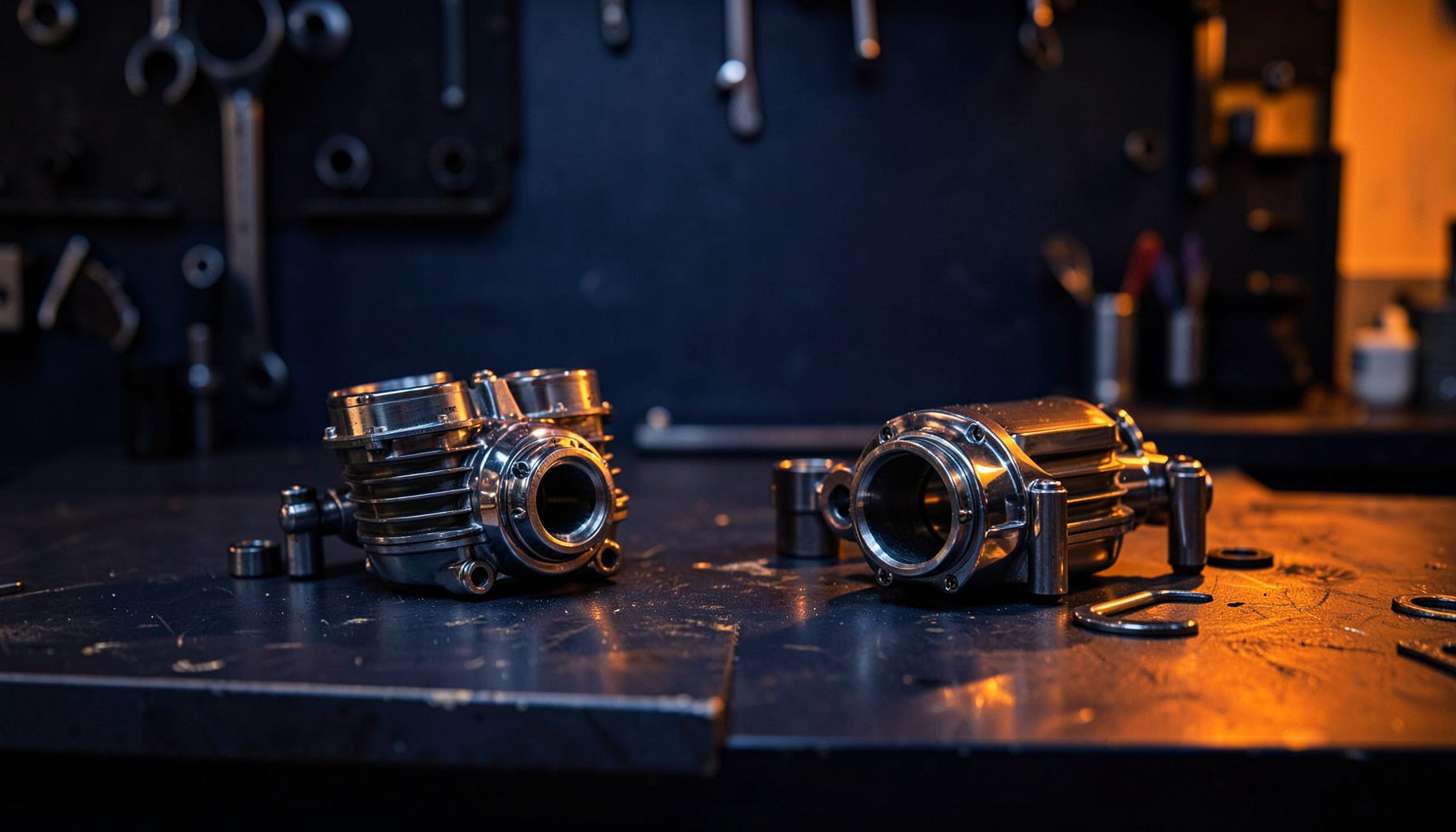
How to Select the Correct Motorcycle Camshaft for Your Engine
A motorcycle camshaft controls when the inlet and exhaust valves open, how far they lift, and how long they remain open. These details shape an engine’s power delivery, throttle response, idle quality and usable rev range. Selecting the right cam is therefore more involved than choosing a performance part based on a claimed horsepower figure.
The correct choice depends on the complete engine package, including displacement, compression ratio, cylinder head, exhaust, fuel system, ignition and intended use. Whether you ride through Sydney traffic, commute across Melbourne or cover long distances in regional Australia, a suitable camshaft should improve the motorcycle rather than make it difficult to ride.
Start With Engine Identity
Begin with the exact motorcycle details: manufacturer, model, year, engine size, market specification and, where relevant, the engine code. A camshaft for a 2012 Yamaha MT-07 may not suit an earlier or later version, even when the motorcycles appear almost identical. Variations can include different timing marks, automatic decompressor arrangements, sensor triggers and bearing dimensions.
Use the workshop manual or parts catalogue to confirm the original camshaft specifications. Check whether the engine uses a single overhead camshaft, a double overhead camshaft or another arrangement. Some engines also use separate inlet and exhaust camshafts, while others use a shared profile or gear-driven system.
Match The Camshaft To Your Riding
A mild replacement cam is generally the best option for a standard road motorcycle. It can restore lost performance, improve reliability and work with the original fuel injection, exhaust and valve springs. This type of profile suits everyday commuting, touring and mixed riding where smooth low- and mid-range torque matter.
A performance camshaft usually holds the valves open for longer or lifts them further. That can increase airflow at high engine speed, but may reduce idle stability and low-speed response. A race-oriented profile may require higher compression, upgraded valve springs, adjustable cam gears and fuel tuning, making it less practical for a road bike used around Brisbane or Perth.
Check The Specifications That Matter
The main camshaft measurements are duration, lift, lobe separation angle and timing position. Duration describes how long a valve remains open, while lift indicates how far it opens. More duration and lift can support high-rpm power, although the engine must have enough airflow and clearance to use those features safely.
Valve-to-piston clearance is essential. A cam with aggressive timing can cause contact when the piston reaches top dead centre, particularly after cylinder head machining, a high-compression piston installation or changes to cam timing. Verify the manufacturer’s clearance requirements and have the engine measured rather than relying on assumptions.
Cam timing also affects the result. Advancing the cam can strengthen low- and mid-range response, while retarding it may move power higher in the rev range. Adjustable cam sprockets allow fine tuning, but they require accurate measurement with a degree wheel and cannot compensate for an unsuitable cam profile.
Compare Camshaft Options
The following comparison provides a general guide. Exact results vary between engines, so use the manufacturer’s data for the selected motorcycle.
| Camshaft type | Typical riding character | Supporting changes | Main benefit | Main compromise |
|---|---|---|---|---|
| Standard replacement | Smooth, predictable road performance | Usually none | Restores factory operation | Limited performance gain |
| Mild street performance | Stronger mid-range and improved response | Intake, exhaust or fuel adjustment may help | Good balance for road use | Requires correct tuning |
| High-performance street | More top-end power and higher rev range | Valve springs, tuning and clearance checks | Increased output at higher rpm | Rougher idle and reduced low-speed manners |
| Race or competition | Designed for maximum circuit performance | Engine build, adjustable timing and specialist tuning | Strong peak power | Poorer road practicality and service demands |
An aftermarket camshaft is not automatically superior to an OEM-equivalent replacement. A quality standard cam may be the sensible choice for a touring motorcycle, while a carefully matched street profile can suit a modified engine. Look for clear specifications, application data and installation instructions rather than relying on vague claims.
Account For Australian Conditions And Rules
Australian riding conditions can expose weaknesses in an unsuitable engine setup. Heavy traffic in Sydney and Melbourne places value on clean low-speed running, while high ambient temperatures in Adelaide, Darwin and inland areas increase the importance of correct fuelling and cooling. A cam that works well on a cool circuit may be frustrating in slow urban traffic.
Long distances between workshops and parts suppliers also make reliability important for riders in regional Queensland, Western Australia and New South Wales. A radical profile that demands frequent valve checks may be inappropriate for a touring or adventure motorcycle. Consider service intervals, fuel availability and whether replacement components are easy to source locally.
Modifications must comply with applicable Australian Design Rules and the roadworthiness or vehicle-modification requirements in your state or territory. Rules differ between jurisdictions, and changes affecting emissions, noise or engine performance may require inspection or engineering approval. In New South Wales, Victoria and Queensland, registration and inspection obligations can differ, so check current guidance before fitting a competition cam to a road-registered motorcycle.
Checks Before Ordering
Confirm the following details before placing an order:
- Exact make, model, year and engine capacity
- Original or modified compression ratio
- Single or twin camshaft layout
- Intended use: road, touring, track or competition
Also inspect the rest of the valve train and engine combination:
- Valve spring pressure and coil-bind clearance
- Retainer-to-seal and valve-to-piston clearance
- Cam chain, tensioner and sprocket condition
- Fuel injection or carburettor tuning requirements
A camshaft installation is a good opportunity to inspect the cam chain, guides, followers, buckets and bearing surfaces. Worn supporting parts can damage a new cam quickly. Follow the workshop manual for lubrication, timing marks, torque settings and valve-clearance adjustment.
Buy With A Clear Installation Plan
Before selecting a camshaft, decide whether the motorcycle needs a direct replacement or a complete performance upgrade. For a standard engine, an OEM-equivalent component is usually the safest route. For a tuned engine, match the cam to the piston, head work, exhaust and intake system as a complete package.
Pattern Parts stocks motorcycle engine components, performance parts and maintenance products for a wide range of makes and models. Use the motorcycle-specific product information to verify compatibility, then arrange professional fitting and tuning when clearance measurements or modified valve timing are involved. Choosing carefully now helps deliver reliable power, clean running and a camshaft that suits real Australian roads.