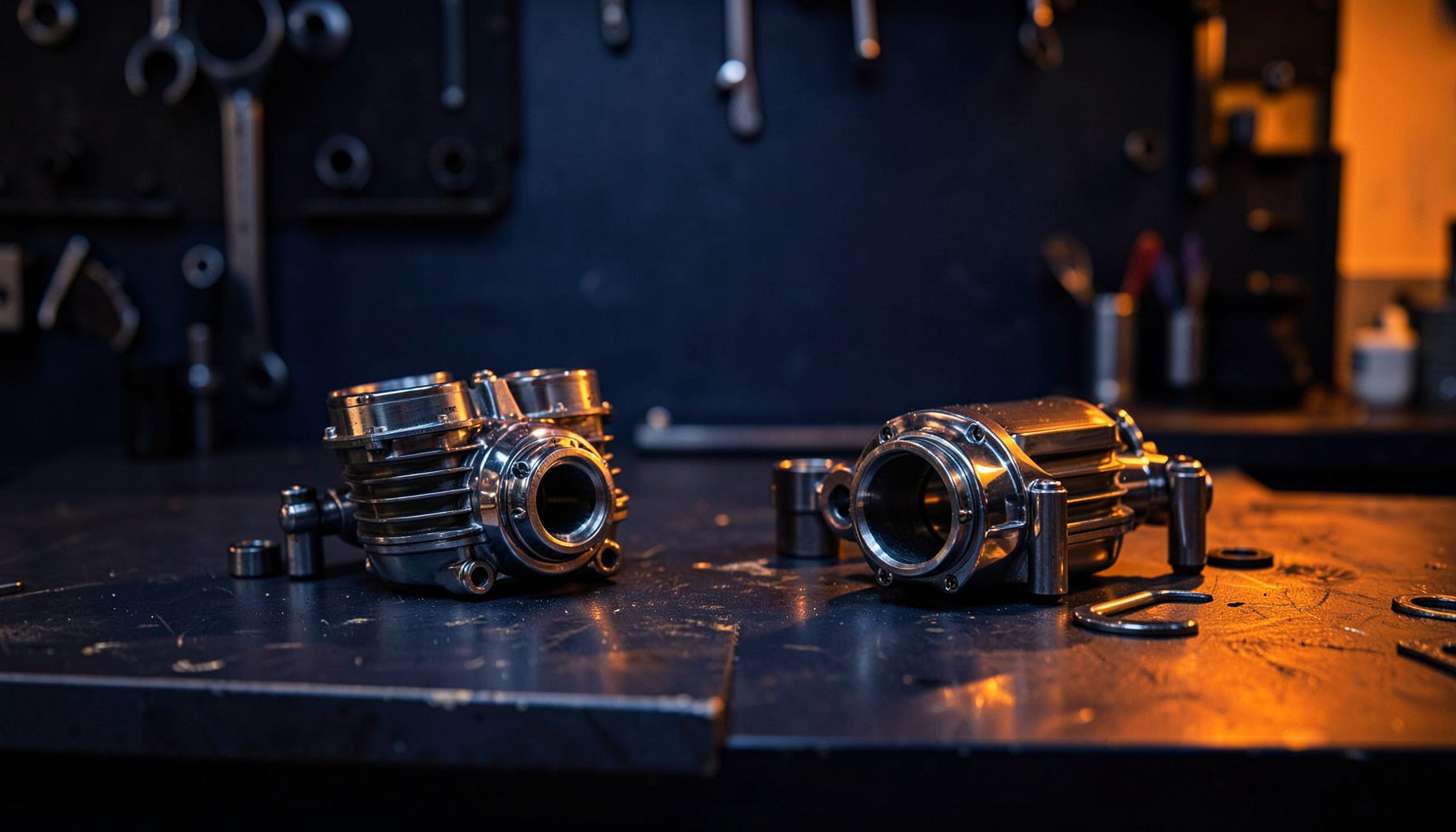
The best motorcycle parts for improving fuel economy
Choosing the right motorcycle components can reduce fuel consumption, but the strongest gains usually come from restoring efficiency rather than adding a dramatic-looking accessory. Filters, tyres, engine parts and well-matched tuning equipment all have a role, depending on the bike’s condition and use.
A practical evaluation starts with a measured baseline, changes one component at a time and checks the result over several tanks. This separates worthwhile improvements from parts that mainly change appearance, noise or acceleration.
Establish an honest fuel-use baseline
Record fuel economy in litres per 100 kilometres, using tank-to-tank figures or the trip computer. Keep the rider, luggage, route, speed and tyre pressure consistent; otherwise traffic, hills and wind can distort a comparison.
Repeat the test on comparable rides and use the same approved fuel grade. Cold, short trips around a city often use more fuel per kilometre, so a motorway figure should be compared directly with another stop-start route to ensure it remains meaningful.
Restore efficiency before adding upgrades
A clean air filter that matches the engine’s intake system helps the ECU read airflow correctly. A restrictive or damaged filter can reduce efficiency, while an oversized high-flow filter may require a matching fuel map. The sensible starting point is the correct replacement filter.
Correct-spec motorcycle oil, fresh spark plugs and properly functioning fuel injectors preserve combustion efficiency. Cleaning or replacing injectors is worthwhile when misfires, rough idle or poor economy show a fault; routine servicing of an otherwise healthy engine is not a substitute for diagnosis.
Tyre pressure, chain tension and clean brake components also influence real-world results. Under-inflated tyres increase rolling resistance, a tight chain adds drag and worn brake hardware can waste energy. Pattern Parts carries filters, chains, sprockets, brake parts, electrical items and engine components, allowing these corrections to be handled as one coherent maintenance plan.
Match upgrades to the engine and riding goals
Gearing, intake and exhaust changes affect different parts of the throttle range. A slightly taller final drive may reduce engine speed at a steady cruise, but excessive sprocket gearing can weaken acceleration and alter speedometer accuracy. An ECU flash may recover modest economy if the original calibration is conservative, provided the hardware remains compatible.
A side-by-side comparison separates realistic gains from marketing claims:
| Component or change | Likely fuel-use effect | Best applied when | Main limitation |
|---|---|---|---|
| Correct tyre pressure and touring tyres | Low to moderate saving | The tyre is under-inflated or a touring compound suits the bike | Grip and wet-weather safety still come first |
| Clean filter and correct oil | Small saving | The existing item is dirty, damaged or wrongly specified | Oil alone cannot compensate for poor tuning |
| Injector cleaning or renewal | Moderate saving | Testing confirms atomisation or fuelling faults | Symptoms may have another cause |
| Larger final sprocket | Modest cruise saving | The bike spends excessive time at high revs | Poor low-speed response if too extreme |
| Compatible ECU flash | Modest saving | The calibration leaves efficiency on the table | Wrong maps can cause faults or warranty issues |
| Full exhaust system | Limited saving alone | The engine is tuned for the changed gas flow | Noise, emissions and compliance need checking |
A full exhaust system may improve breathing, yet the ECU must compensate for the different airflow and oxygen readings. Removing the catalytic converter can also create emissions problems. On many motorcycles, sensible exhaust tuning delivers more performance than economy.
Account for Australian riding conditions
Sydney and Melbourne commuters often combine short city trips with stop-start traffic, making cold starts and low-speed running less economical. Lane-filtering rules and permitted routes also differ between jurisdictions, so route choice can affect both journey time and fuel use. Brisbane’s humid summers and frequent heavy rain encourage regular chain cleaning and careful care of electrical connectors, while Perth’s longer distances and strong headwinds reward efficient touring setups and reliable cruise control.
Fuel grades and ethanol content matter too. E10 is widely available across Australia, but each motorcycle’s manual should be checked for compatibility because ethanol has lower energy density. When riders use an approved blend, consistent fuel quality makes tank-to-tank comparisons more meaningful.
Traffic can also make the bike’s own consumption harder to isolate. Compare similar weather, time of day and speed, and separate urban fuel use from a steady rural run. A windscreen, touring tyre or gearing change may help on open roads while having little effect during a slow city commute.
Handle tuning, exhaust and customs details
Exhaust noise limits and modification rules vary across Australian states and territories. A louder system is not automatically more efficient, and removing emissions equipment can trigger a warning light or make the motorcycle non-compliant. An ECU tune should preserve the correct oxygen-sensor and throttle response rather than merely increasing fuel delivery.
Big bore kits generally favour capacity and performance, not economy. Larger internal dimensions usually need revised injectors, air mapping and sometimes exhaust changes; doing only one part of that work can increase consumption or create reliability problems. Servicing information and engine-specific guidance are therefore as important as the component itself.
For overseas orders, compare the full landed cost rather than the advertised part price. Australian Customs clearance, GST on low-value goods, freight and possible inspection charges can change the final amount, while used components may need to be clean and free of prohibited material. Before ordering from Pattern Parts, check the website terms for sale, delivery and cancellation information, then confirm that the part fits the exact year, model and engine variant.
Build a practical buying plan
Prioritise parts that correct a fault or restore the original specification. A neglected motorcycle will usually respond better to fresh plugs, a proper filter, clean injectors, correct oil and accurate tyre pressure than to a bolt-on performance accessory. Record the result before considering a second change.
Then match spending to the motorcycle and the rider. Everyday commuters may benefit most from reliable servicing and efficient tyres, while touring riders can gain from suitable gearing, a windscreen and maintained controls. Riders seeking more power should choose compatible intake, fuelling and exhaust components rather than treating each purchase as an isolated modification.
Start with Pattern Parts’ motorcycle maintenance guidance, identify the exact machine and select one compatible part. Measure before and after over three full tanks, keep the test conditions consistent and retain the baseline, so each purchase can be judged on running cost as well as performance.