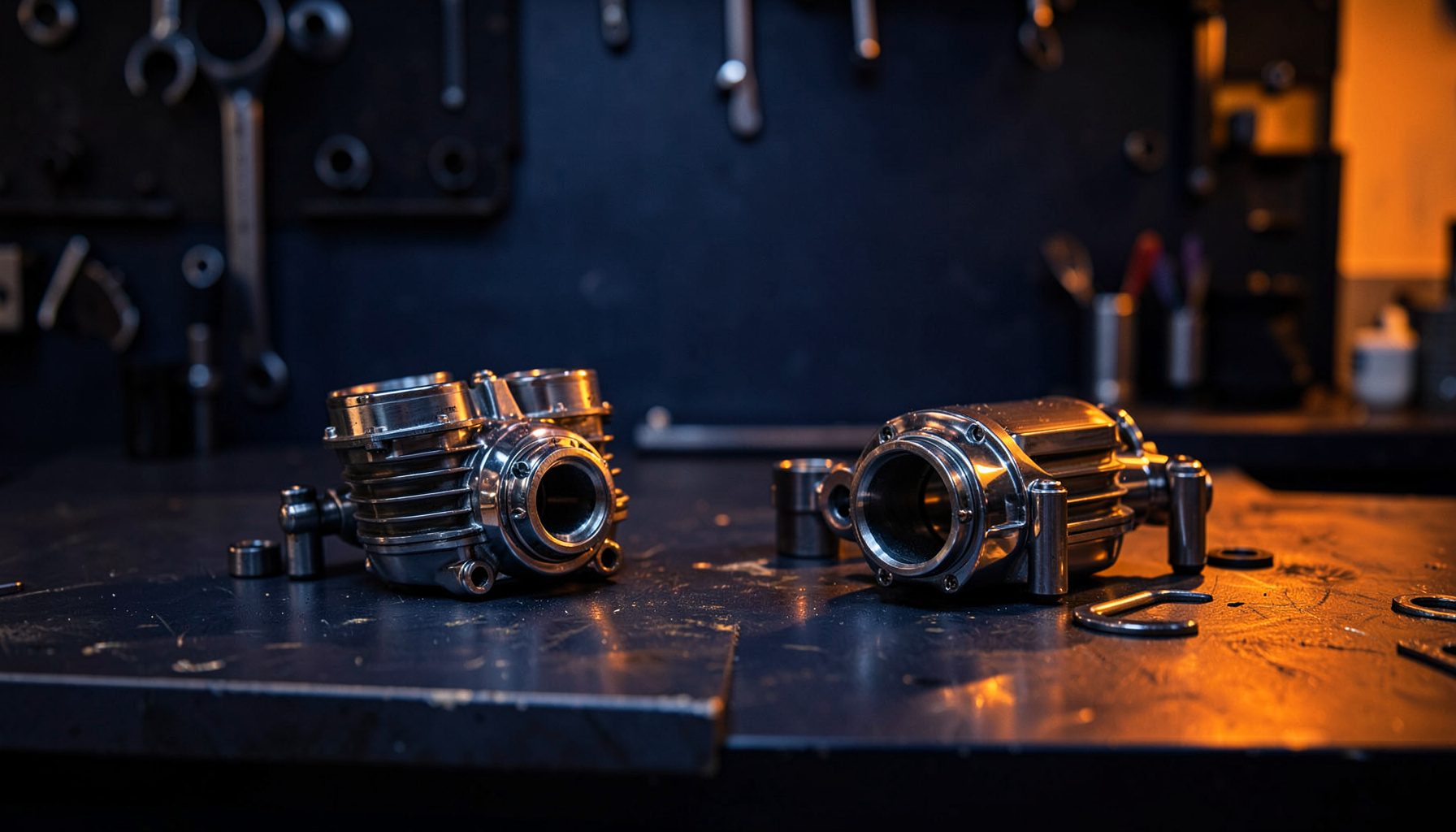
Weighing slip-on exhausts against full systems for Australian riders
For riders across Sydney, Melbourne, Brisbane and beyond, the exhaust note is more than background noise — it is part of the character of the bike. Choosing between a slip-on muffler replacement and a complete full system is one of the most common upgrade decisions Australian motorcyclists face, particularly those who commute through busy CBD corridors or escape on weekends to winding roads like the Great Ocean Road or the hills around Adelaide.
Both options sit firmly within the aftermarket world, alongside other popular modifications like air filters, sprocket changes and ECU remapping. Each delivers a different balance of sound, performance, weight and price, and each interacts with Australian road rules and warranty conditions in its own way. Riders who split their time between city filtering in Brisbane and touring the long, open stretches of the Hume Highway will have very different priorities from those chasing lap times at Phillip Island or The Bend.
Before committing to either route, it helps to understand what each upgrade actually contains, how it changes the bike's behaviour, and what the practical consequences are once it is bolted on. The decision is rarely about which option is universally better — it is about which one fits the bike, the rider and the kind of roads Australia throws at you.
Understanding what sets slip-ons and full systems apart
A slip-on exhaust replaces only the muffler section of the original exhaust, keeping the factory header pipes and catalytic converter in place. It is essentially the back half of the system, which means the engine still breathes through the same restrictive upstream components. A full system replaces everything from the exhaust ports back, including the headers, mid-pipe, catalytic converter and muffler, offering a complete reimagining of how spent gases exit the engine.
Because a slip-on is a bolt-on component designed to mate with the original headers, installation is usually straightforward and reversible. Full systems, by their nature, require removal of far more hardware and often involve new mounting brackets, gaskets and sometimes oxygen sensor extensions or bungs. For a rider working in a home garage in Perth or a shared workshop in Hobart, that difference alone can decide which upgrade is realistic.
The visual change is also distinct. A slip-on typically reshapes the rear of the bike, where the muffler and end-can sit, leaving the rest of the exhaust looking untouched. A full system transforms the profile from the engine outward, often exposing more of the frame and swingarm, which appeals to riders building a particular aesthetic around their machine.
The performance and sound trade-offs
Gains from a slip-on are generally modest. With the stock headers still creating back pressure and flow restrictions, any improvement in horsepower or torque tends to be small — often in the low single digits as a percentage. The bigger reward is acoustic: a deeper, fuller note at idle and through the mid-range, which many riders across Newcastle and the Gold Coast consider the main reason to upgrade.
A full system unlocks the engine's breathing properly. With smoother-bending headers, fewer restrictions and a higher-flow muffler, gains in the mid and top end become meaningful, particularly on larger-capacity machines used for two-up touring across the vast distances between towns in the outback. Pairing a full system with a proper fuel map can transform how a bike responds to the throttle, something that matters on sweeping Victorian or Tasmanian back roads where the engine spends long periods at sustained revs.
The sound, though, is where full systems can attract unwanted attention. Many are tuned for maximum flow rather than street manners, and the volume at full chat can be significant. Australian noise rules are enforced differently in each state, and a rowdy system on a Sunday ride through suburban Adelaide can bring a knock at the door from local authorities.
Installation complexity and DIY considerations
A slip-on can typically be fitted in under an hour with basic tools. Loosen the clamp, remove the old can, slide on the new unit, retighten and adjust the position. For riders who like to tinker on the driveway in Geelong or in a unit car park in Parramatta, this is a very accessible project. No fuel system work is required, and the bike can usually be ridden straight away with no further adjustments.
A full system is a different proposition. Removing headers means dealing with stuck bolts, heat-seized nuts and the constant risk of rounding off fasteners on older bikes. New gaskets must be fitted, fasteners torqued to spec, and sensor connections checked. For riders less experienced with mechanical work, paying a workshop in Brisbane or Melbourne to handle the install adds significantly to the overall cost.
There is also the matter of tuning. A full system changes how the engine breathes, and the factory fuel map will no longer match. Without an ECU flash or a fuel controller, the bike may run lean or rich, leading to poor throttle response, reduced fuel economy and in extreme cases, engine damage. Slip-ons, by contrast, usually do not require any tuning changes, which is part of their enduring appeal.
Cost, value and resale implications
Slip-ons are the budget-friendly entry point. Prices vary widely depending on brand and materials, but most sit well below the cost of a quality full system. For riders on a fixed income or those simply wanting a sound upgrade without committing to a major expense, the slip-on makes practical sense. It is also the kind of modification that can be removed and swapped before selling the bike, leaving the original exhaust intact for the next owner.
A full system is a serious investment. Premium brands use titanium or carbon fibre, materials chosen for their heat resistance and lightness — useful in the Australian climate where summer road temperatures can punish inferior components. The price reflects the materials, the engineering and the labour involved, and it can easily rival the cost of a major service interval on a mid-sized adventure bike. Resale value may or may not recover this investment, depending on whether the next buyer shares the original owner's taste.
Any non-standard exhaust can also complicate warranty claims with the manufacturer. A slip-on is less likely to raise flags at a dealership service in Canberra than a complete header-and-muffler replacement, although either modification technically places the warranty at risk if it can be linked to a subsequent failure.
Legal compliance and noise regulations in Australia
Australia enforces noise regulations through the Australian Design Rules, with ADR 83/00 setting a 94 dB(A) limit for new motorcycles under a defined test cycle. This is the benchmark manufacturers must meet to type-approve a bike, and aftermarket exhausts sold for road use must, in theory, also comply. In practice, enforcement varies considerably from state to state. Riders in New South Wales can be subjected to on-the-spot noise testing, while other jurisdictions rely more heavily on defect notices or complaints-driven inspections.
Emissions are a separate but related issue. Removing or modifying a catalytic converter, as some full systems do, may push a motorcycle outside its original compliance envelope. For bikes still under factory warranty or those subject to periodic inspection in states with stricter regimes, this is a serious consideration. Slip-ons that retain the catalytic converter and original sensors generally pose fewer legal headaches.
For riders who take their bikes to a registered workshop for a roadworthy certificate before sale or after a crash, undocumented or non-compliant exhaust modifications can lead to failed inspections and costly rework. Choosing a system with clear documentation, including compliance marks and a certificate where applicable, removes much of that risk.
Matching the right system to your riding style and bike
The honest answer is that there is no single right answer. A commuter filtering through Brisbane traffic on a small parallel twin has very different needs from someone riding a litre-class superbike on track days at Phillip Island or The Bend. The commuter may find a slip-on offers all the character they want at a price they can justify, while the track rider chasing measurable performance gains will almost certainly need a full system paired with proper tuning.
Riders who tour long distances, particularly through remote areas where the nearest dealer might be hundreds of kilometres away, often favour the simplicity and reliability of a slip-on. Those who want to extract every bit of performance from their machine, or who are building a bike around a specific look and feel, often accept the higher cost and complexity of a full system.
The smart approach is to ride the bike as it is for a while, identify what is genuinely missing — more sound, more performance, more weight savings — and then choose the upgrade that addresses that specific gap. Pattern Parts stocks a wide range of options to suit both paths, and the team can help match the right components to your make, model and ambitions. Browse the catalogue, check the fitment guides, and pick the system that lines up with how and where you actually ride.