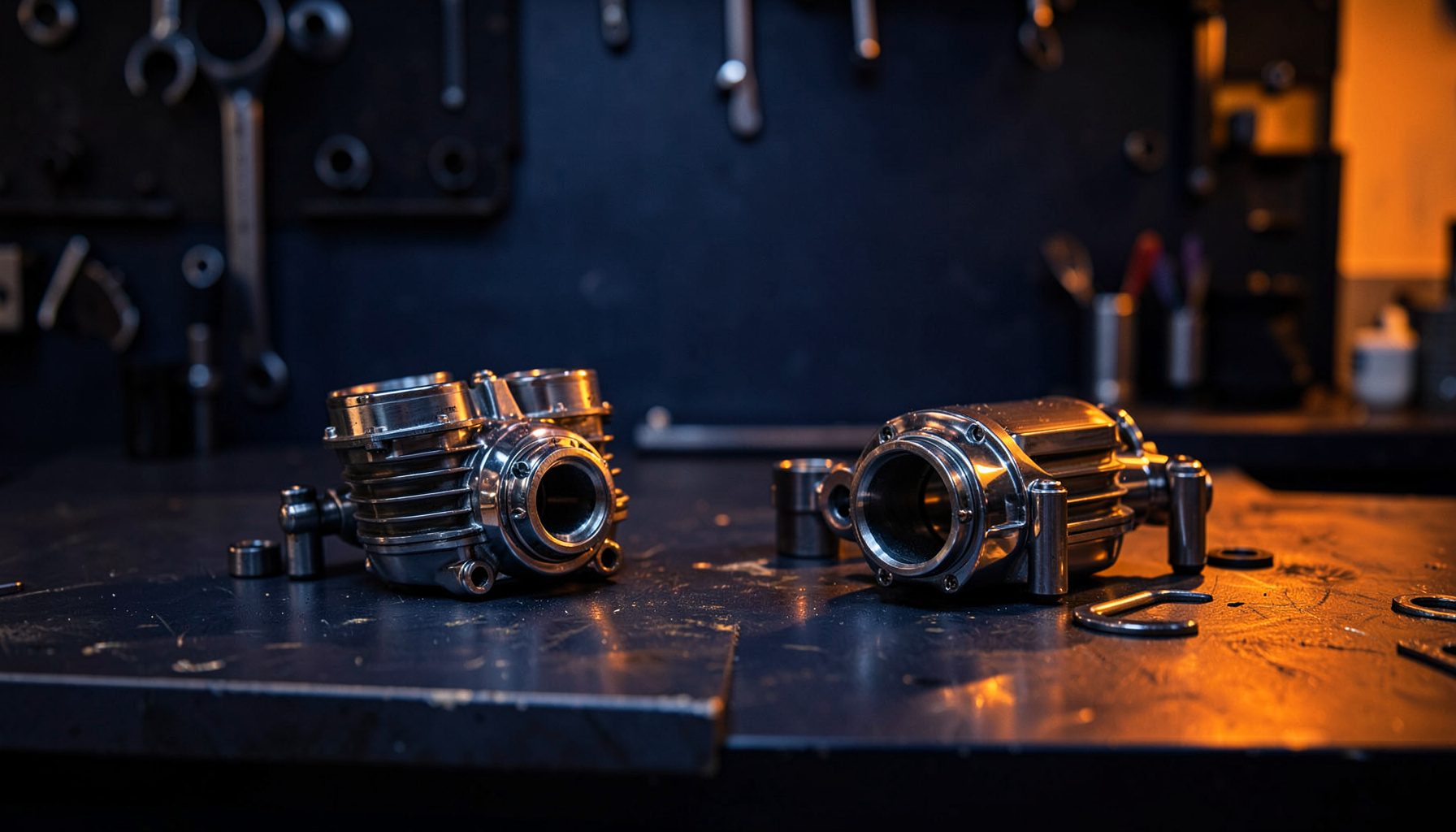
How a Motorcycle Quick Shifter Works and Whether It Belongs on Your Bike
A motorcycle quick shifter is one of those upgrades riders either swear by or dismiss as a race-day toy. The truth sits somewhere between the two, and for Australian riding conditions it can offer genuine value on the right machine. Before spending several hundred dollars on a kit, it helps to understand exactly what the device does inside the gearbox and how it interacts with the engine management system.
In cities like Sydney, Melbourne and Brisbane, riders spend hours filtering through peak-hour traffic on everything from a Honda CB650R to a Kawasaki Z900. Out on weekend loops through the Yarra Valley or the tight bends of Mount Glorious, the temptation to leave the clutch alone between cogs is strong. A well-matched electronic shifter makes that possible without jerking the chain or upsetting the fuelling.
The aftermarket in Australia has matured considerably over the last decade. Plug-and-play kits from brands like Bazzaz, Healtech, Woolich Racing and Dynojet are stocked by local workshops, and most late-model Japanese and European machines have at least one supported unit available off the shelf.
How the System Actually Interrupts the Engine
A quickshifter is essentially a load sensor mounted near the shift rod, paired with an electronic control module. When the rider applies pressure to the lever, the sensor sends a signal to the ECU asking for a brief ignition or fuel cut, just long enough for the dogs on the next gear to disengage and re-engage cleanly.
Two main cut methods exist. Spark-cut systems momentarily stop the spark at one or two coils, while fuel-cut versions briefly halt injector pulses on specific cylinders. Spark-cut units tend to feel sharper, while fuel-cut versions are often smoother on big-bore or heavily tuned engines. Some standalone modules allow the rider to choose between the two and adjust the cut duration in milliseconds, which is useful when swapping between a city commute and a sprint session at The Bend in South Australia.
The sensor itself is usually a strain gauge or a linear position sensor. Both detect the very small movement of the shift lever before the mechanical parts have fully separated, giving the electronics a head start. Without that brief interruption the gearbox would refuse to slot home, because the input shaft is still turning under load.
Factory-Fitted Versus Aftermarket Kits
Modern sportbikes from Yamaha, Suzuki and Ducati often ship with up-and-down shift assist that only works when the bike is in the right riding mode and paired with the manufacturer's ECU. These systems are reliable but sometimes locked behind premium trims or optional packages, which is why many Australian buyers turn to the aftermarket instead.
Standalone units from brands like Bazzaz or Healtech sit alongside the OEM system and talk directly to the bike's diagnostic port. They are popular among riders in Adelaide and Perth who tune their own machines, because cut time and intensity can be dialled in on a laptop rather than during a costly dyno appointment.
Compatibility With Bikes Australians Actually Ride
An electronic shifter is most effective on motorcycles with a transverse inline-four or a modern parallel twin. Bikes such as the Yamaha MT-09, Kawasaki Ninja 650, Honda CBR650R, KTM 790 Duke and Triumph Street Triple are all excellent candidates, both from the factory and the aftermarket.
Smaller LAMS-approved machines like the Honda CB300R, Yamaha MT-03 and KTM 390 Duke can also benefit, though the gains are smaller because the engines produce less torque and the gearboxes have shorter throws. For learner riders, a stand-alone unit wired through a Woolich Racing dongle is often the most affordable route.
Harley-Davidson touring models, Royal Enfield classics and older air-cooled bikes are generally not supported, because their ignition systems cannot be interrupted cleanly. Anyone riding a classic mid-1980s BMW airhead or a Harley Sportster should look at clutchless upshifts through aftermarket rearsets instead.
Legal and Insurance Realities Across Australia
ADR compliance treats a quick shifter as a non-structural electrical modification, so it does not affect a vehicle's registration when installed correctly. However, Australian insurers such as Shannons, Lumley and Swann sometimes ask for written notification, and any failure traced to a poorly wired aftermarket module could give them grounds to refuse a claim.
For riders still on L-plates or P-plates, the laws in each state restrict engine modifications that change a bike's performance classification. A quickshifter alone does not push a LAMS-approved machine out of compliance, but the moment it is paired with an aftermarket ECU flash or a full exhaust system the situation changes.
Where It Pays Off on the Road
Riders in Melbourne know how tedious a slow crawl through Hoddle Street can be on a litre bike. The clutch hand tires quickly, and constant feathering becomes uncomfortable in summer heat. A smooth electronic upshift lets the left hand relax slightly between changes, which adds up over a long commute from the outer suburbs.
On country roads such as the Great Ocean Road, the Putty Road north of Sydney, or the Black Spur in Victoria, the device lets riders hold throttle position through a corner exit. Less disruption to the rear tyre means smoother drive and more predictable traction on the cold, damp bitumen common in Tasmania and the high country during winter.
Where It Earns Its Money at the Track
Track-day regulars at Phillip Island, Wakefield and The Bend treat electronic shifters as almost essential kit. Modern electronics allow mid-corner corrections without closing the throttle, which keeps lap times consistent across a 20-minute session and reduces the risk of an upsets on cold tyres in the morning.
In race conditions the device can shave several tenths per lap, which is significant at club level where grids are tight. Standalone units with adjustable kill times let riders tune behaviour per gear, useful on a KTM RC390 with widely spaced ratios or a Yamaha R6 with a close-ratio race box.
Tuning the Cut Time to Suit Your Riding
The kill window, measured in milliseconds, is the single most important setting on any aftermarket quickshifter. Too short and the gearbox will grind; too long and the rear tyre will chatter as the engine goes momentarily lean. Most Australian tuners start at around 60 to 80 milliseconds for a stock inline-four and work upwards from there.
Riders who commute through Brisbane's morning traffic usually prefer a slightly longer cut for smoother engagement, while track-day riders at Wakefield often shorten the window for faster shifts. Some modules also allow the cut to be applied only on upshifts, leaving downshifts to a separate auto-blipper function that holds the throttle open during deceleration.
Practical considerations before buying a kit
- Sensor type and confirmed compatibility with your bike's ECU
- Adjustable cut duration in milliseconds, not just on or off
- Weather sealing rated for coastal humidity and tropical north Queensland rain
- Local technical support and a warranty honoured by an Australian distributor
Signs an electronic shifter is a smart addition
- You commute in heavy stop-start traffic and your clutch hand aches
- You attend track days and want repeatable, faster gear changes
- You ride a modern inline-four or parallel twin with a healthy spread of torque
- You regularly tackle twisty weekend routes and want smoother throttle control
Browse the Pattern Parts catalogue to find plug-and-play quick shifter kits, strain gauge sensors and compatible wiring looms for most Japanese, European and American machines. Stock ships from the UK to Australian addresses through tracked freight, and the team can advise on fitment for specific models. Whether you ride a daily commuter through Brisbane traffic or a track-only race bike at Wakefield, the right electronic shifter can transform how the gearbox feels between corners.