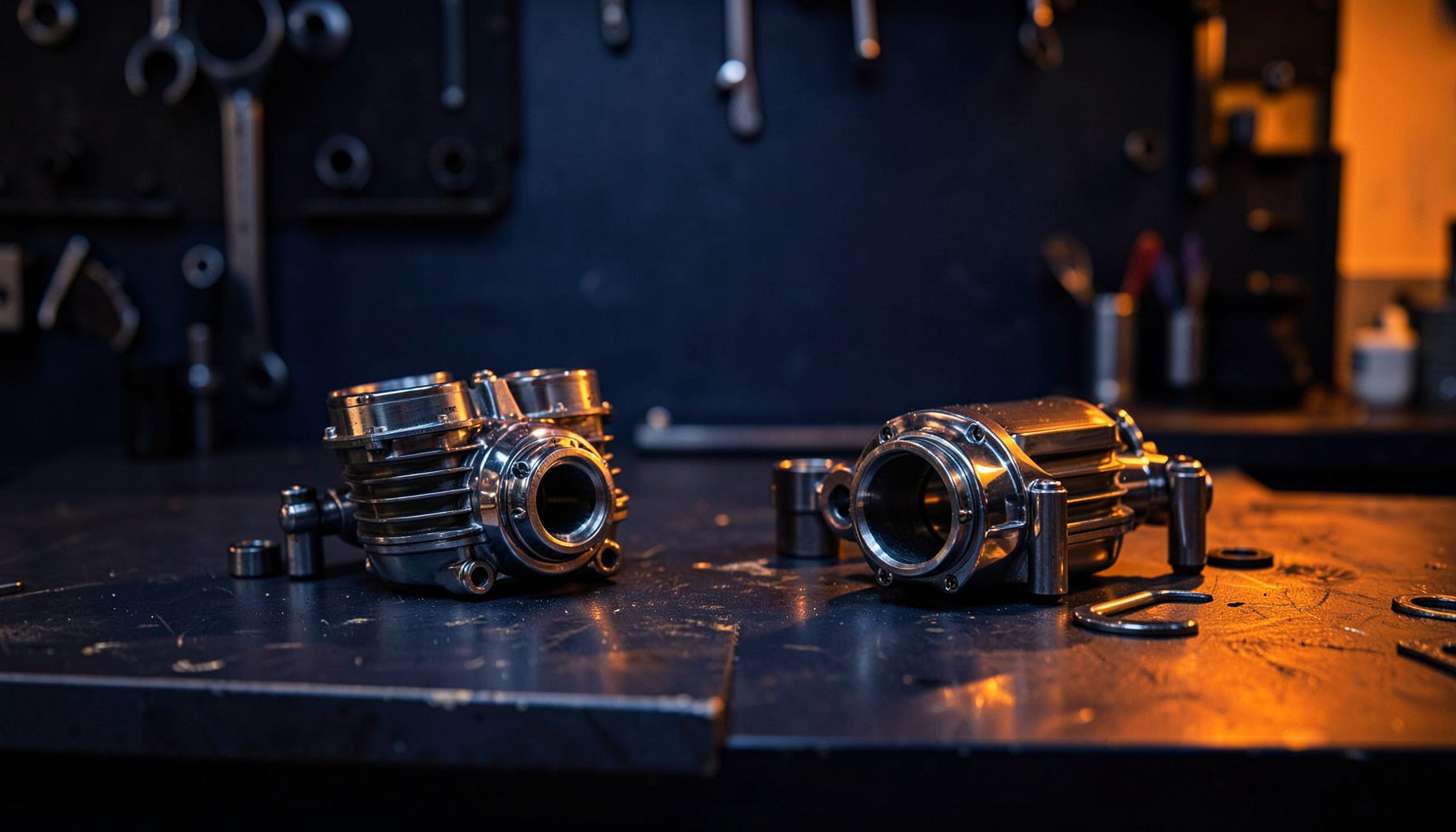
A better fuel pump for a stronger motorcycle
Upgrading your motorcycle's fuel pump for high performance can restore crisp throttle response, protect leaner engines from fuel starvation, and make acceleration more predictable. It is a worthwhile change when the original unit has weakened or when modifications have increased the engine's fuel demand.
A fuel pump does more than move petrol. It supplies the flow and working pressure required by the carburettors or injectors, and it must keep doing so through vibration, heat, corners, and long riding days. A tired pump may still start the engine, but its output can drift.
An OE-equivalent replacement restores original behaviour, while a well-matched performance unit adds flow reserve, consistent delivery, and stronger construction. The second option can suit tuned engines, touring machines carrying extra load, and older bikes whose electric pump has spent years working hard.
Compatibility matters more than peak output. A pump that delivers excessive pressure or the wrong electrical feed can reduce performance or damage components, so identification, pressure figures, connectors, and fuel-system layout should guide the purchase.
Symptoms that point to poor fuel delivery
Low or unstable fuel pressure often appears as hesitation during acceleration, a rough idle, stalling at junctions, or a warning light. The bike may recover after you open the throttle or wait, which can make the fault seem intermittent.
Listen for a noisy pump, check for weak suction at a disconnected fuel line where applicable, and look for corrosion, damp fuel, or a dirty filter. A blocked filter or failing pressure regulator can imitate a weak pump, so diagnosis should follow the manufacturer's test points.
Black-rich exhaust smoke, sudden misfires, or a strong fuel smell can also indicate excess fuel rather than low pressure. On electronically controlled bikes, the ECU may compensate until its limits are reached, delaying the obvious symptom.
Why Australian riding puts extra strain on pumps
Australian conditions can be hard on fuel-system hardware. Summer heat raises fuel temperature, sealed roads amplify vibration, and corrugated surfaces punish loose fittings. Dust is another issue, particularly on gravel routes through northern Australia.
E10 is widely available across Australia and is suitable for many modern motorcycles, although fuel containing ethanol can absorb moisture during long storage. Water contamination and degraded fuel are especially troublesome in old tanks, so an upgraded pump cannot compensate for stale petrol or a perforated line.
Stop-start traffic around Sydney, Melbourne, Brisbane, and Adelaide increases demand, while trips from the Red Centre to Darwin or along remote highways leave little room for a roadside failure. Aussie riders know the drill: get the bike off the road and call for roadside assistance rather than trying to diagnose it beside an open fuel line.
What a performance upgrade can improve
A useful high-performance fuel pump provides steadier pressure and enough flow for demanding riding, not simply a louder motor. It can reduce the chance of lean hesitation when the engine opens up, especially at low revs or with a high-load exhaust.
Quality upgrades may also use better seals, corrosion-resistant parts, quieter bearings, and designs suited to heat and vibration. Those features matter on a daily commute, a blacktop touring bike, or an older machine that rarely sees a workshop.
Modern EFI systems usually regulate pump output, so extra capacity does not automatically mean extra pressure; the ECU and regulator still control delivery. Comparing the broader aftermarket market through Jokers Racing can be useful, but specifications must always be matched to the motorcycle.
Choosing a pump that fits the fuel system
Begin with the exact model and year, then check the original pump number, voltage, connector layout, physical dimensions, and whether it sits inside the tank or outside it. EFI systems may also use a model-specific pressure regulator or fuel-level sender.
For a carburetted motorcycle, the replacement may need to support a vacuum-actuated system or provide steady feed under changing throttle demands. For EFI, verify pressure at the rail and flow requirements before fitting anything stronger. Never assume one universal upgrade suits every engine.
Before blaming the pump, rule out intake restriction with this air-filter cleaning guide. Pattern Parts' Nottingham-based catalogue covers more than 30,000 motorcycle products, so the correct replacement can be compared with related filters, electrical parts, and engine components in one place. Australian buyers should also check delivery, currency, and electrical terms before checkout.
Comparing the main replacement routes
Several sensible routes are available, and the best option depends on the engine's condition and how it is used. Compare the figures rather than relying on phrases such as “heavy duty” or “universal”.
| Option | Main advantage | Main consideration | Best fit |
|---|---|---|---|
| OE-equivalent replacement | Factory-style pressure and flow with straightforward fitment | Confirm year, connector, and system type | Standard motorcycles restored to specification |
| Matched performance pump | Extra delivery reserve, consistent pressure, and improved durability | May require harness, regulator, or tank changes | Tuned engines, touring loads, and older electric pumps |
| Budget aftermarket unit | Lower purchase cost and wide availability | Check pressure, flow, polarity, and durability carefully | Older carburetted bikes with a simple requirement |
| Used or rebuilt original | Reuses the original housing and some working components | Condition can vary and warranty may be limited | Project motorcycles away from daily use |
OE-equivalent parts are the lowest-risk choice for an otherwise standard bike. A matched performance pump makes more sense when extra flow, diagnostic feedback, or improved durability is needed, while a used unit may suit a project bike but offers less certainty.
Upgrade with the right parts
Use the motorcycle's manual and the old pump's markings to confirm every requirement. If the bike has EFI, injectors, a regulator, or modified exhaust work, have the fuel pressure and duty cycle checked before a stronger unit is installed.
Visit the model-specific listings at Pattern Parts, select the unit that meets the bike's specified pressure and flow, and order the correct connector, fuse, and seal together. If the diagnosis is unclear, book a qualified motorcycle technician before changing the fuel system.