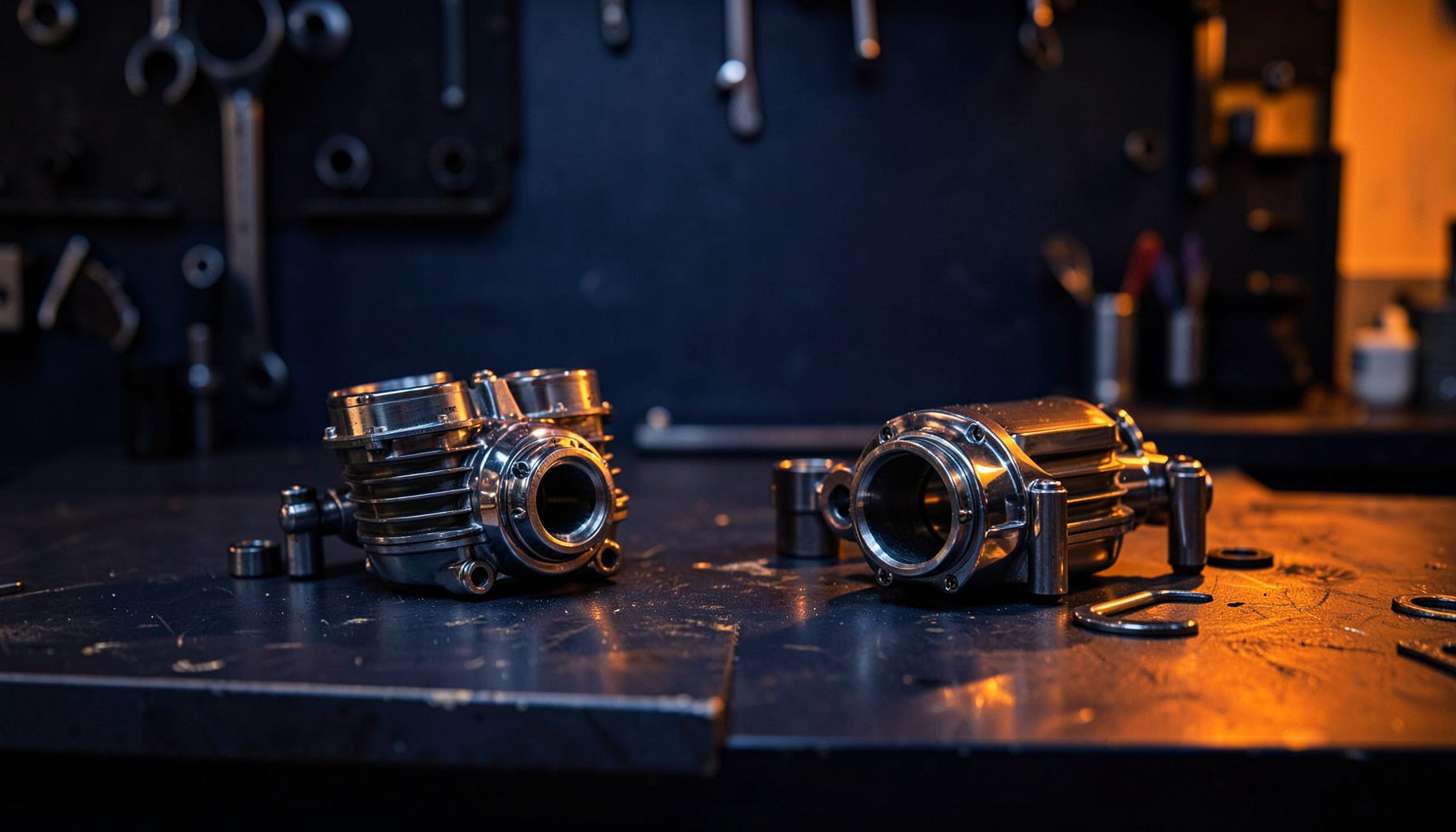
Why your motorcycle has a flat spot in the powerband and how to cure it
A motorcycle that pulls cleanly through most of its rev range can suddenly seem to hit a wall at one particular band of engine speed. Throttle response becomes abrupt, revs climb slowly, or the engine hesitates before recovering. This is commonly called a flat spot in the powerband, and it can make overtaking on a Melbourne merge or changing lanes in Sydney traffic unexpectedly stressful.
It differs from ordinary low-revving torque or a naturally broad power curve. A true flat spot is a distinct interruption: the motorcycle may surge below 5,000 rpm, hesitate near 6,000, then pull hard above 7,000. It can vary with temperature, altitude, gear and load, so one road test may not reveal it.
Flat spots usually come from an ignition interruption, incorrect fuel delivery, restricted airflow, excessive exhaust back-pressure or an engine-management limit. The repair depends on finding which system changes at the same engine speed. Modern motorcycles also hide faults in diagnostic data, making part-by-part guesswork both expensive and unreliable.
What a flat spot feels like
Start with how the fault appears. A hesitation only at part throttle may point to a vacuum leak, throttle-position error or intake-system problem. A dead zone under full load more often implicates fuel pressure, injectors, ignition or a restricted exhaust. A momentary cut during shifting can instead come from clutch slip, traction control, a gear-sensor signal or an ECU rev-limiter strategy.
Record engine speed, gear, throttle opening, road speed, air temperature and whether the fault triggers every time. If it appears only after the motorcycle has warmed up, heat-soaked coils, an electric fuel pump or a hot exhaust component become more likely. A fixed rpm in every gear gives a repeatable pattern that is far more useful than a general complaint of poor acceleration.
Ignition and fuel delivery faults
Check plugs for wear, fouling and the correct heat range, then test the coil, plug cap and wiring while the fault is present. A plug that looks acceptable may still have the wrong heat range or an intermittent internal failure. On electronic fuel injection, check pump pressure, filter condition, regulator operation, injector pulse and pressure decay from the fuel rail.
Fuel choice matters in Australia. Most metropolitan areas offer 91 RON petrol and E10, while 95 or 100 grades and dependable fresh fuel become less predictable on regional trips. Use E10 only when the manufacturer or fuel cap permits it, and remember that higher octane cannot repair a fouled plug or blocked filter. On carburettored motorcycles, stale fuel, blocked jets, incorrect float height and a failed needle also need attention.
Airflow and exhaust restrictions
Airflow faults become clearer as demand rises. A dust-clogged air filter is common after riding through Brisbane’s dry-season roads or unsealed tracks, while a cracked intake boot, blocked airbox, incorrect restrictor plate or damaged reed can starve the engine above a particular rpm. Check intake components for oil contamination and confirm that the filter and throttle arrangement match the original specification.
Exhaust restrictions add load at high rpm. Look for crushed header pipes, leaking joints, debris or a damaged internal baffle, and verify that the oxygen sensor is reporting correctly. On engines with variable valve timing, a seized actuator, incorrect oil pressure or a faulty cam-position sensor can imitate poor ignition tuning. Software limits, wheel-speed sensors and electronic throttle errors can also create an abrupt power cut.
A repeatable diagnostic process
Begin with a baseline inspection rather than an upgrade. Check battery health, earth points, fuses, connectors, throttle operation, valve clearance, chain condition, fluid levels and visible leaks. Compression and leak-down tests can reveal a weak head gasket or a valve that is not sealing; either fault can produce a sharp loss of torque as load rises. Inspect before opening the fuel or intake system.
Then reproduce the fault under controlled conditions and scan for stored or live diagnostic trouble codes. A fuel technician can watch injector pulse, pressure and commanded versus delivered fuel; an electrical technician can monitor ignition events and sensor inputs. Wide-open-throttle testing belongs on a dyno or closed course, not in fast public traffic. Comparing closed-throttle acceleration with full-throttle acceleration helps separate a vacuum leak from a fuelling or ignition failure.
Repairs and compatible upgrades
Repair according to the evidence. Replace a verified failed plug, coil, sensor, injector or pump; renew the correct filter; restore the intake and exhaust to a sound factory state; and address mechanical defects such as low compression. If the engine has sat with stale fuel, drain and replace contaminated fuel rather than relying on a questionable additive. Every part should match the motorcycle’s year, model, engine code and fuel-system type.
The UK-based Pattern Parts carries more than 30,000 products, including filters, chains, sprockets, exhausts, big bore kits, electrical parts and engine components, with OEM-equivalent replacements and aftermarket upgrades available. Australian buyers should compare landed cost in Australian dollars, warranty and return terms, not merely the advertised price.
An unfamiliar marketplace listing or a catalogue such as bubble-bear online catalogue may help compare descriptions and identifiers, but it does not prove compatibility. Confirm the OEM number and application data before fitting an injector, regulator, cam or ECU, because similar-looking parts can have different flow rates, pressure settings or programming.
Roadworthy, legal and reliable results
Any exhaust or engine modification must also satisfy Australian road rules. Noise, smoke and emissions limits are enforced under state and territory legislation, and an altered motorcycle may need to be declared to the registration authority and insurer. Removing a fitted catalytic converter or muffler baffle is not a legitimate tuning shortcut. A roadworthy inspection can assess safety items, but it does not certify that a performance change is legal or properly tuned.
After the repair, repeat the same test under similar conditions to prove that the interruption has gone. Keep the baseline: clean filters, sound plugs, correct fluids, a tensioned chain and periodic valve checks will protect the recovered power. Aftermarket components still need scheduled servicing and correct adjustment, especially after a cam, cylinder, exhaust or electronic change has been fitted.
If the motorcycle surges, hesitates or stalls under load, use the Pattern Parts catalogue and maintenance guidance to identify the likely system before buying components. Search by make, model, year and engine, then compare each candidate with the removed part’s number and specification rather than its appearance.
Book a proper diagnosis before ordering a major upgrade or opening the engine. Once the fault is corrected and the motorcycle is safe, roadworthy and legal, acceleration should progress smoothly through the range instead of disappearing at one rpm. Choose the right part, confirm the repair with a repeatable test, and keep the motorcycle serviced so the powerband remains predictable.