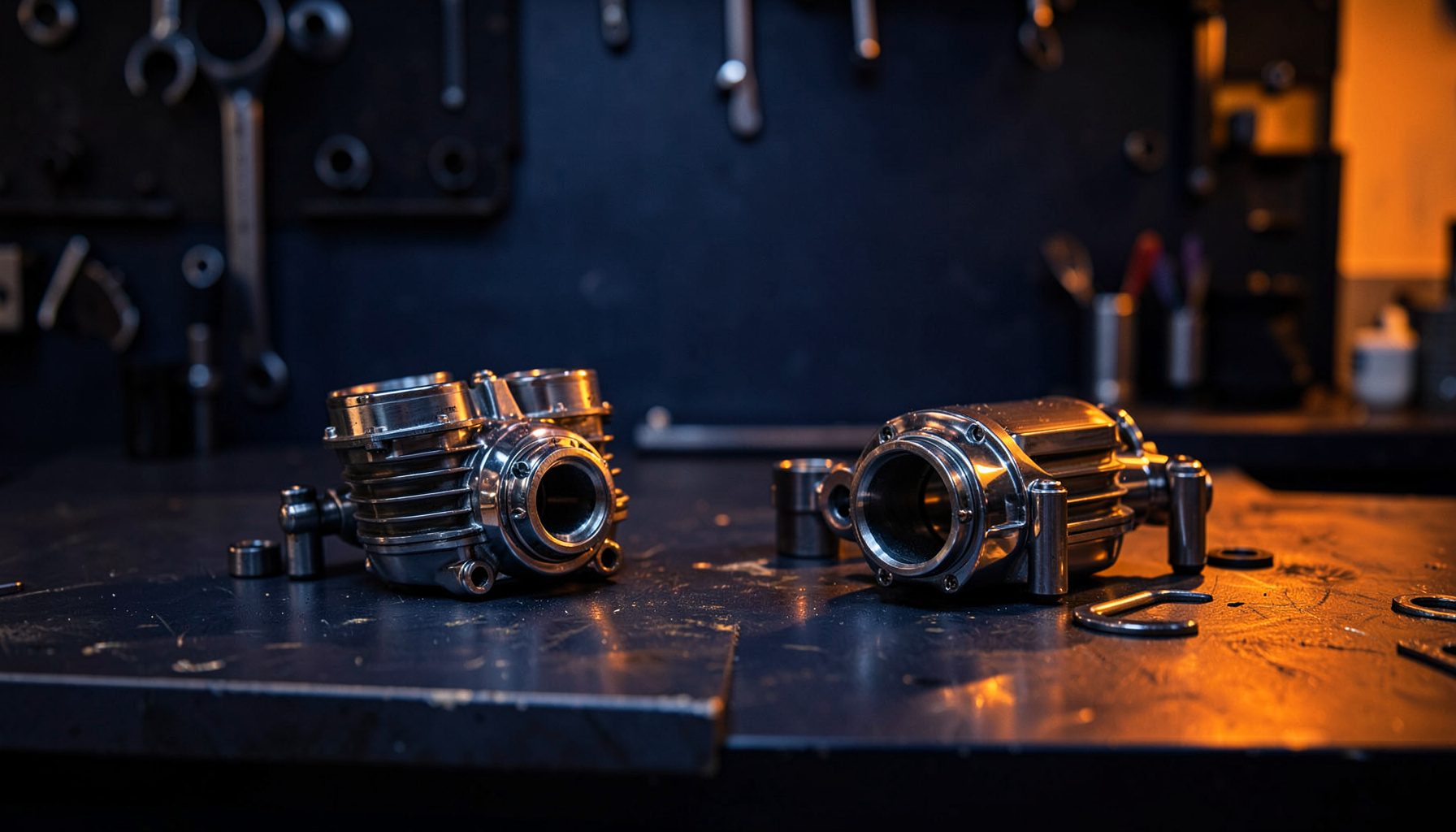
How to upgrade your motorcycle's horn for more volume
Most factory motorcycle horns produce around 100 to 110 decibels, a level often swallowed by engine noise, wind blast, and modern car cabin sound deadening. Riders across Sydney, Melbourne, and Brisbane report that a stock horn barely makes a pedestrian look up, let alone warns a driver edging out of a side street. Upgrading to a louder unit is one of the cheapest electrical modifications available.
Lane filtering is legal in New South Wales, Queensland, and the ACT, which means riders move slowly between lanes of stationary traffic where drivers are notoriously inattentive. A weak horn in that context is a genuine safety gap rather than a minor annoyance, letting a rider cut through urban noise without touching the brakes.
The main categories of aftermarket horn each behave differently once mounted. Air horns driven by a small compressor deliver a low-frequency note, disc horns use a magnetic diaphragm for a sharper tone, and slim electric snail-style units fit where space is tight. Trade-offs around size, current draw, and weather sealing matter when the bike is parked outside in Melbourne rain or Brisbane valley dust.
A commuter weaving through Surry Hills traffic has different needs from a touring rider crossing the Nullarbor Plain, where the hazard is a road train several hundred metres ahead rather than a distracted driver in a hatchback.
Picking the right horn for your riding style
Air horns cut through traffic noise better than a stock beep, but they need a small compressor tucked near the battery or under the seat. On a sports bike with no spare room, that compressor dominates the under-tail area, while on a cruiser there is usually space behind the side panel. The trade-off is bulk for a noticeably louder, lower-pitched tone.
Disc horns have become the most common Australian upgrade. Compact and sealed against water, they respond well to the 12-volt systems fitted across most modern Japanese and European bikes. A twin-disc pair wired in parallel can push output past 115 decibels without major current draw.
Slim snail horns suit naked bikes where a disc unit will not fit. They are quieter, but a quality 110-decibel snail still outperforms a worn factory horn. Riders tackling similar electrical work can reference this guide on replacing a motorcycle camshaft chain tensioner for general spares context.
Gathering tools and confirming the electrical setup
The simplest swap needs a 10 mm spanner, a Phillips screwdriver, a multimeter, and cable ties. Riders working on a tightly packaged machine like a Yamaha MT-09 often find that removing the airbox snorkel creates the space to reach the bracket cleanly. Skipping that step usually leads to scratched plastics.
Australia delivers 12-volt negative-earth systems to nearly every modern bike, but confirm polarity at the connector before unplugging the old unit. A reversed connection on a polarity-sensitive snail or disc horn produces a weak sound and burns out the diaphragm within a few uses. Cross-reference the new horn's amp draw against the inline fuse, since air horns can spike higher than factory ratings during activation.
Removing the factory horn safely
The original horn usually sits near the radiator support or low on the frame rail. On a Honda CB500F or Kawasaki Z650 it is visible without removing bodywork, while on faired sports bikes the lower fairing panel needs to come off first. A plastic trim tool helps, since metal levers can crack painted finishes.
Disconnect the battery's negative terminal before touching any wires. This takes thirty seconds but prevents shorts if a spanner slips against the frame. Riders in coastal cities such as Perth sometimes skip this habit until corrosion turns a quick job into a wiring loom repair.
Unbolt the horn and note which way the trumpet faces. The existing bracket can usually be reused if the new horn matches in footprint, avoiding drilled holes. A smaller unit fits cleanly with a rubber mount or universal L-bracket.
Wiring in the new horn
Wiring a direct replacement uses the bike's original connector. Most disc and snail horns ship with spade terminals, and heat-shrink tubing over the joint keeps moisture out, important for riders in Brisbane, the Gold Coast, or Far North Queensland where tropical rain finds its way into open connectors.
For twin-disc or air horn setups, a relay becomes essential because the original switch was never designed to carry the combined current. A standard 12-volt automotive relay with four pins, plus an inline fuse within 30 cm of the battery, gives the horn full voltage while keeping the handlebar switch at factory load. Cable ties every 10 to 15 centimetres along the existing loom leave the install looking factory-fresh. Riders researching electrical best practice will find additional technical references covering related topics.
Mounting, aiming, and weatherproofing
Mount the horn so the trumpet faces forward and slightly downward. A horn pointed at the sky wastes output, while one angled into the road reflects sound up toward drivers at junctions. Most aftermarket brackets allow a few degrees of adjustment, and a small tweak produces a noticeable change in a built-up area.
Weatherproofing becomes critical once the bike is back outside. Silicone sealant around the connector entry, dielectric grease on the spade terminals, and a rubber boot over the body extend the install's life. Riders storing bikes in a Melbourne laneway often find these steps save them from a replacement horn within twelve months.
After mounting, double-check that nothing rubs against the new unit. A horn that buzzes against the frame at idle sounds like a mechanical fault and loosens mounting bolts over time. A final test on the centre stand, blipping the horn and listening for clean contact, finishes the mechanical side.
Legal notes and final testing on Australian roads
Australian Design Rules govern horn volume, with ADR 76/00 setting limits every road-legal unit must meet. Most reputable aftermarket disc and air horns fall within these limits, but ultra-cheap unbranded units sometimes do not, leaving riders liable to a defect notice. Buying from a recognised Australian supplier removes that risk.
State-level rules also matter. In New South Wales and Victoria, an unmodified aftermarket horn that meets the decibel limit is generally acceptable, while in Western Australia modified horns are policed more actively during routine vehicle checks. A quick look at your state's transport authority website confirms what is legal before committing.
Once installed, take the bike out rather than just pressing the horn in the driveway. Listen to how the sound carries in a suburban street, performs when filtering through Sydney CBD traffic, and whether it is uncomfortable for following riders on a group ride. A solo-commuter horn might be excessive on a club run where etiquette matters, so a final volume check keeps you within both the law and the unwritten road rules.
Order the replacement horn, bracket, and relay kit together today so the bike is back on the road with a sharper warning before the weekend is out.